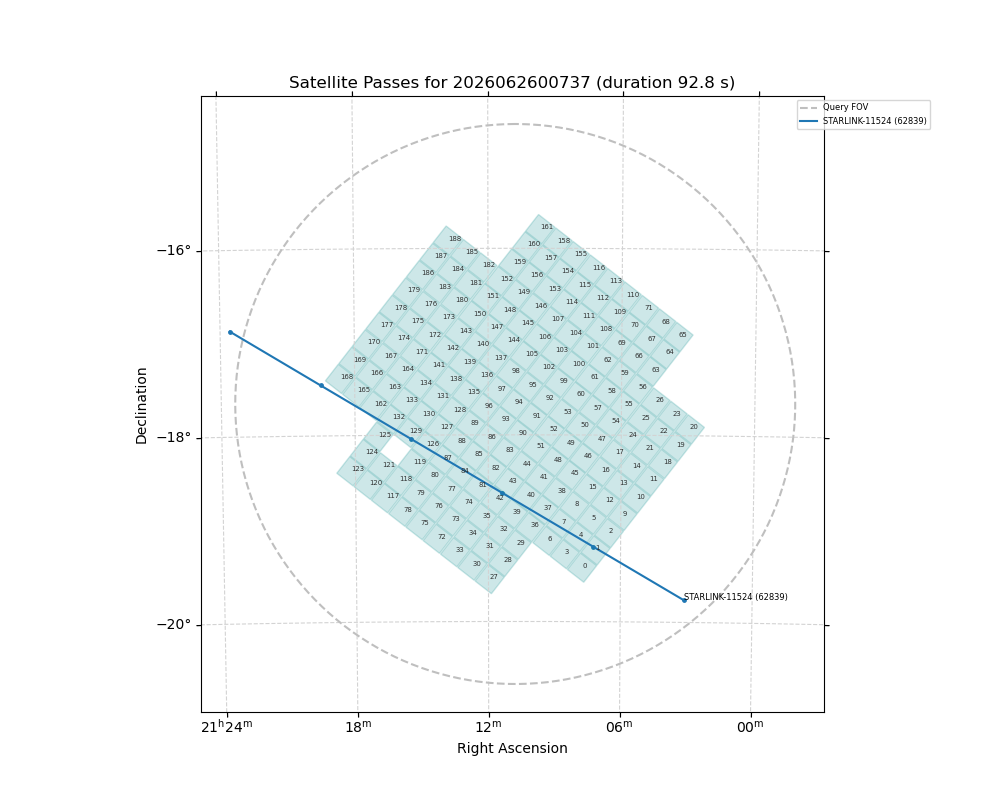
Hello,
I have a question for Solar System Pipeline experts.
I am seeing cases where a very fast object appears to cross multiple Rubin detectors within a single visit, producing several alerts with the same timestamp but different sky positions.
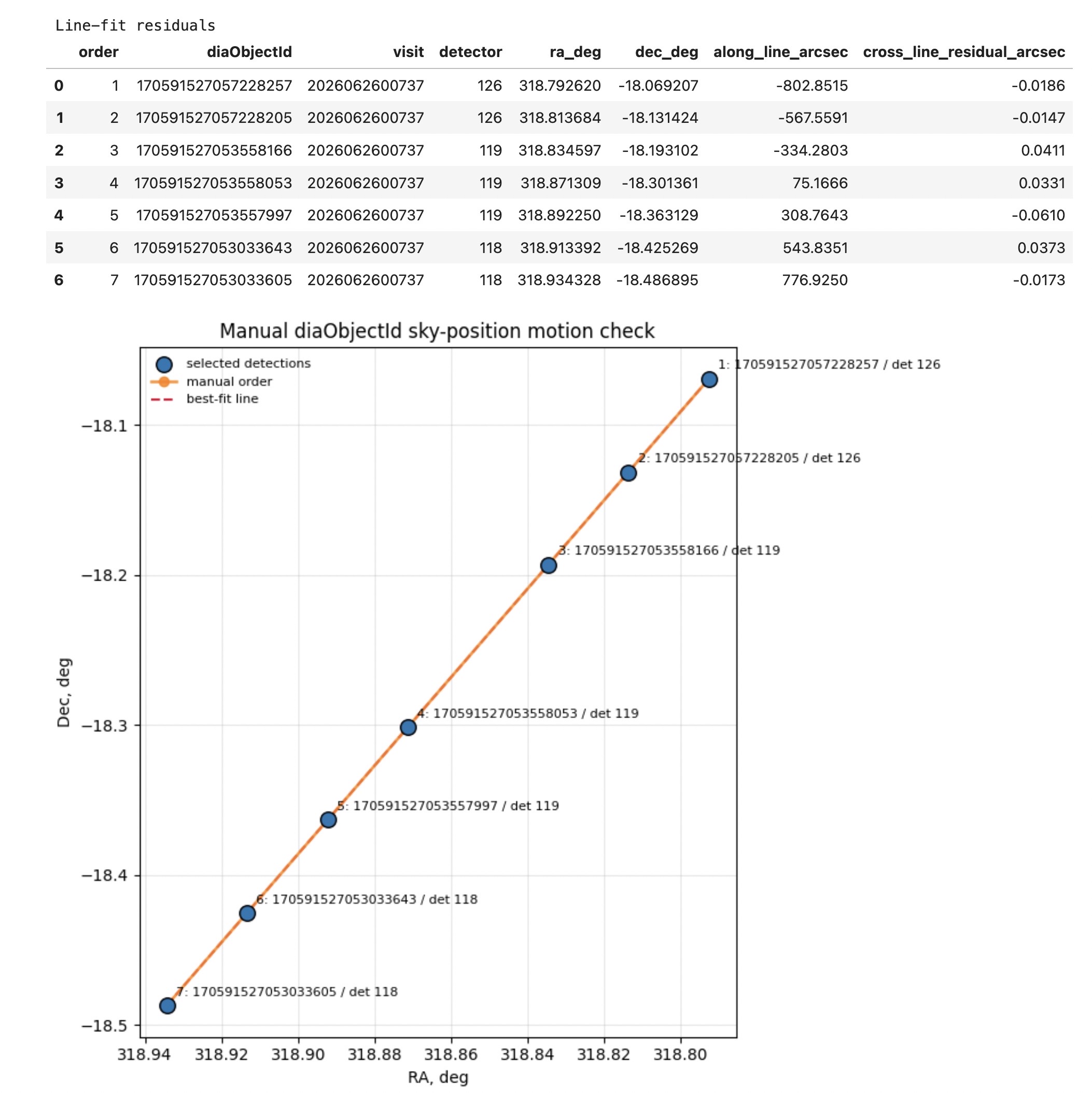
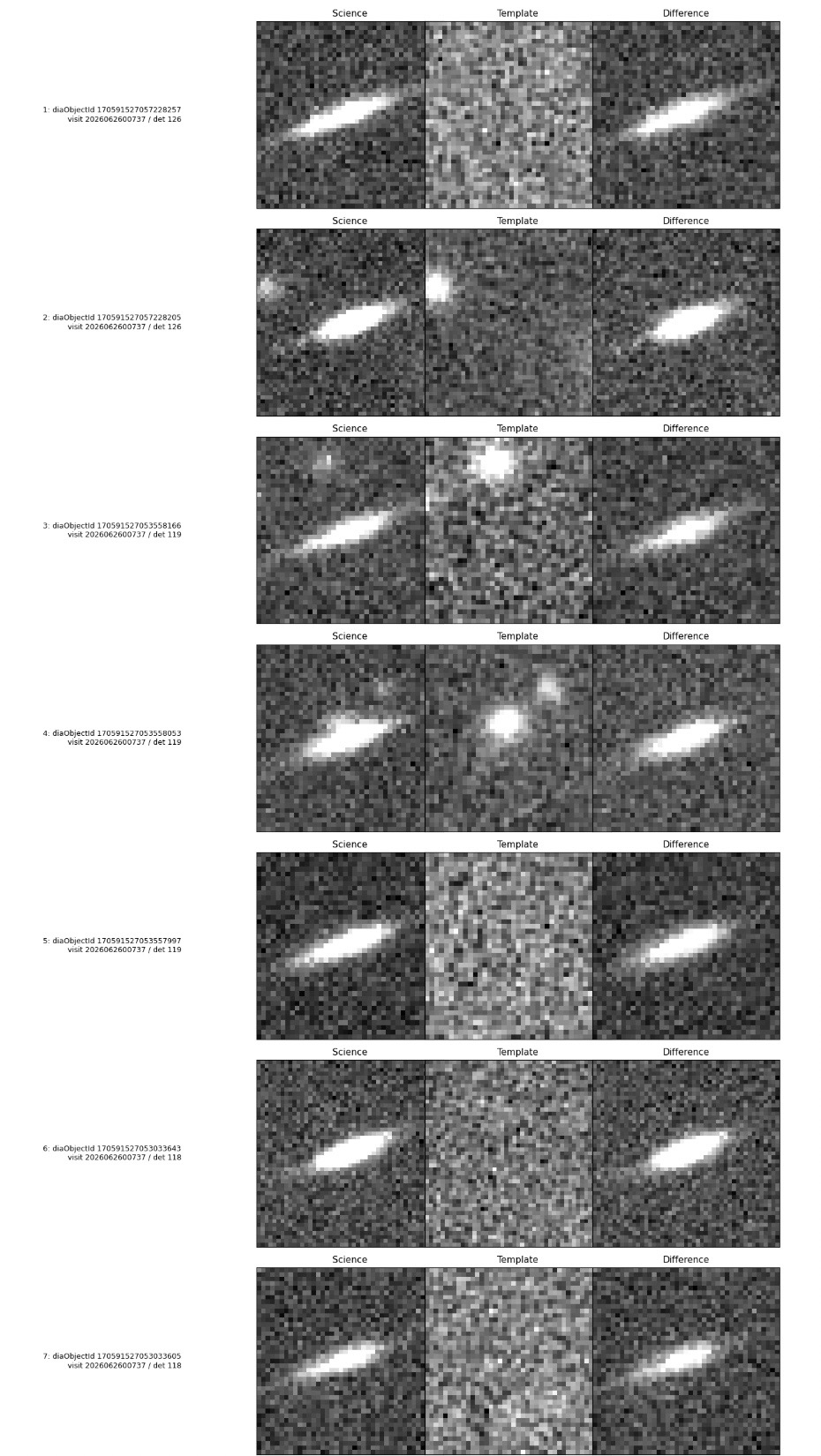
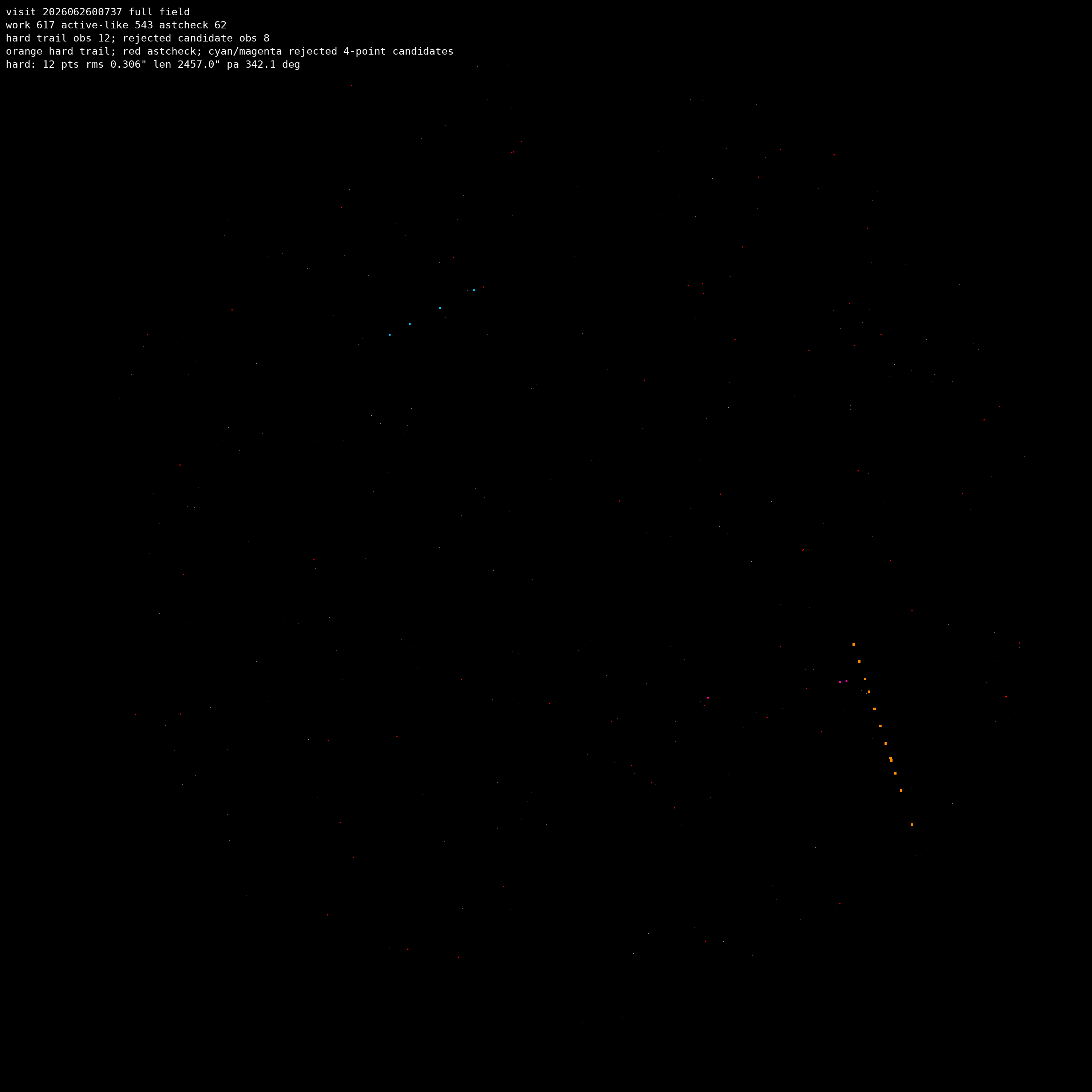
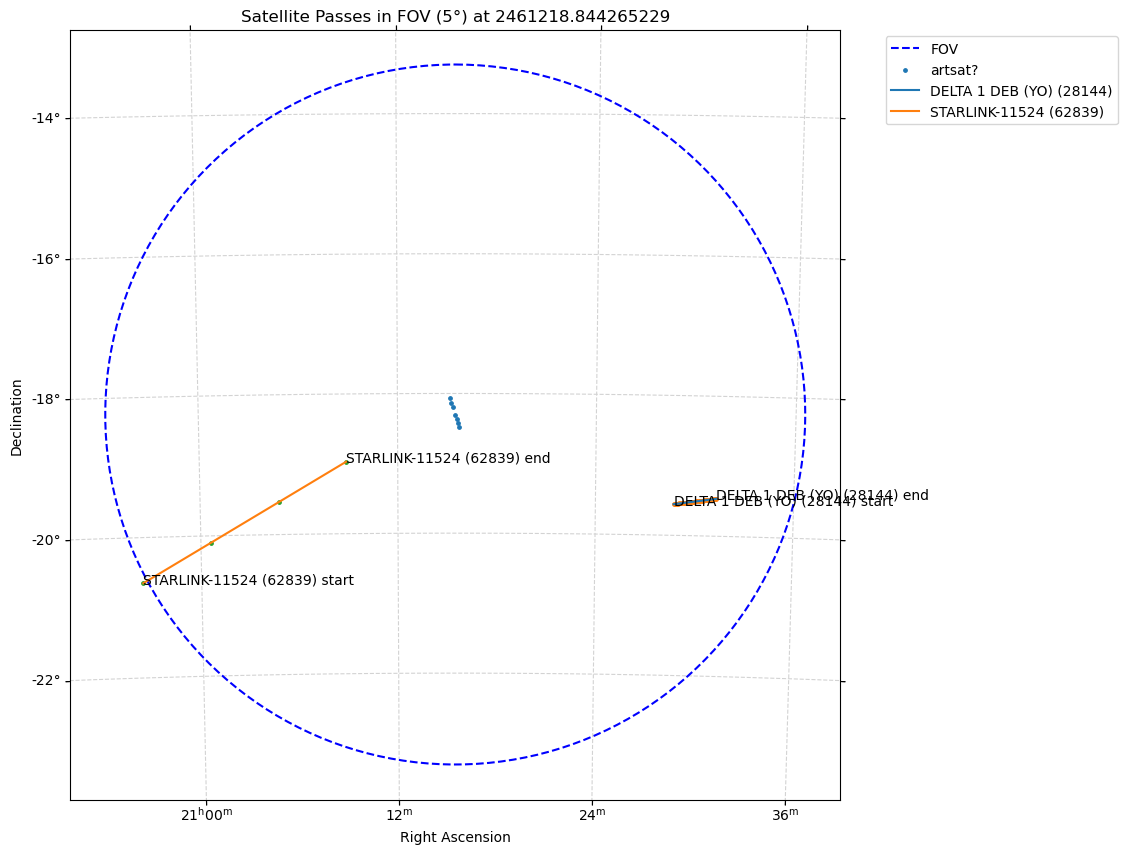
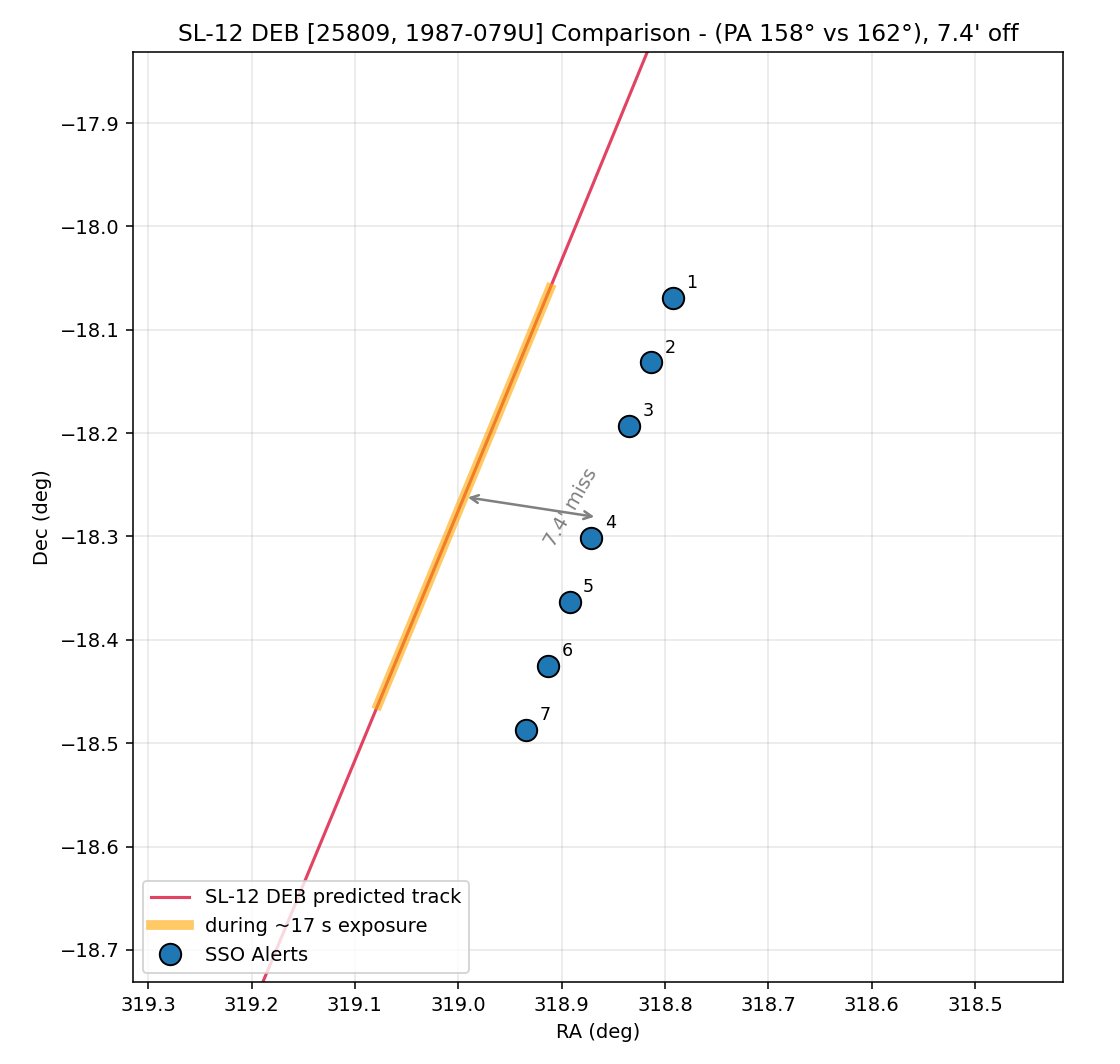
Example below has seven alerts across three detectors (118, 119, 126) line up perfectly in RA/Dec on the night of June 26, 2026, visit 2026062600737. Based on its flux, extendedness, trailLength, reliability score and cutouts it looks like the same object. But if interpreted as one moving object during a single exposure, the implied angular speed is extremely high (over 1000 deg/day).
Since a SkyBot/MPC search does not provide a consistent identification for these alerts, I am looking for a way to identify them, and, if possible, follow-up them with a telescope.
I understand that a meaningful orbit or velocity cannot be derived from alerts sharing the same timestamp, but I am curious how does the Rubin Solar System Pipeline treat these events? Have you found a practical way to identify or distinguish these events in the alert stream? Would an event like this be considered a many-point tracklet by the Solar System Pipeline, despite all seven alerts sharing the same timestamp?
Below are diaObjectId of these 7 alerts, their motion plot and cutouts
diaObjectId:
170591527057228257,
170591527057228205,
170591527053558166,
170591527053558053,
170591527053557997,
170591527053033643,
170591527053033605,
Motion plot
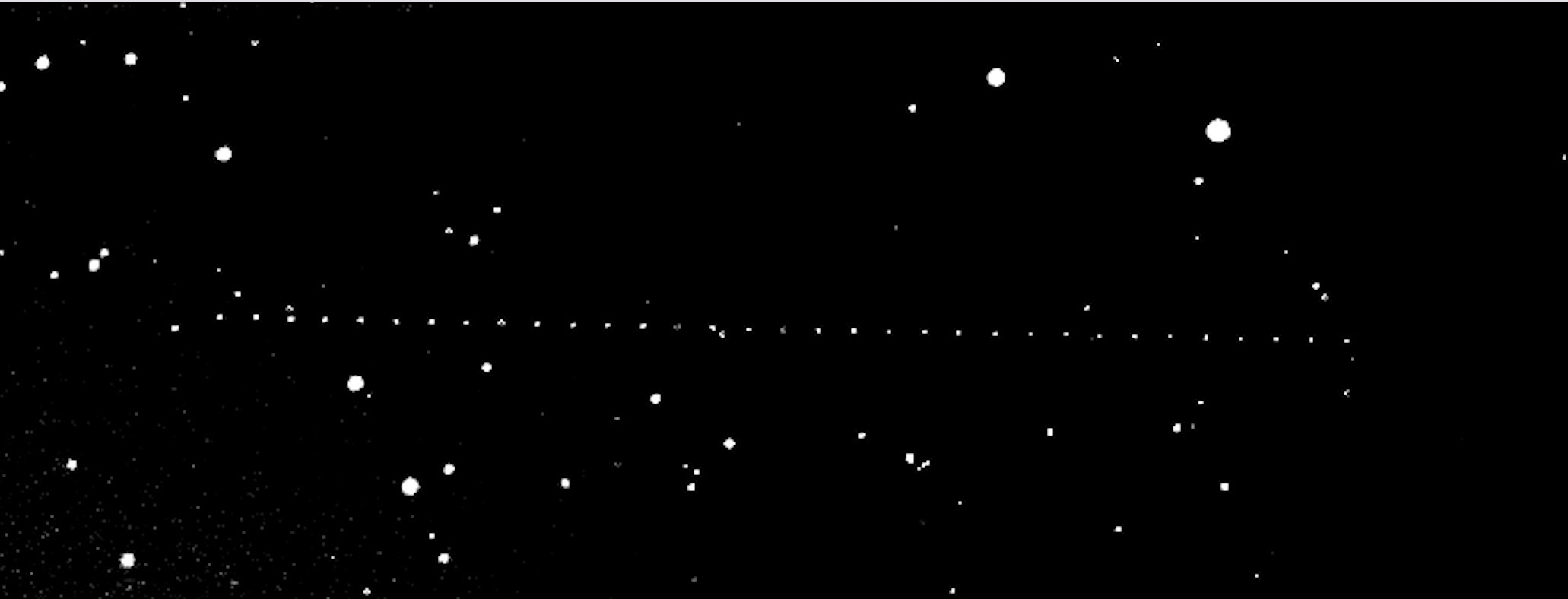
Cutouts
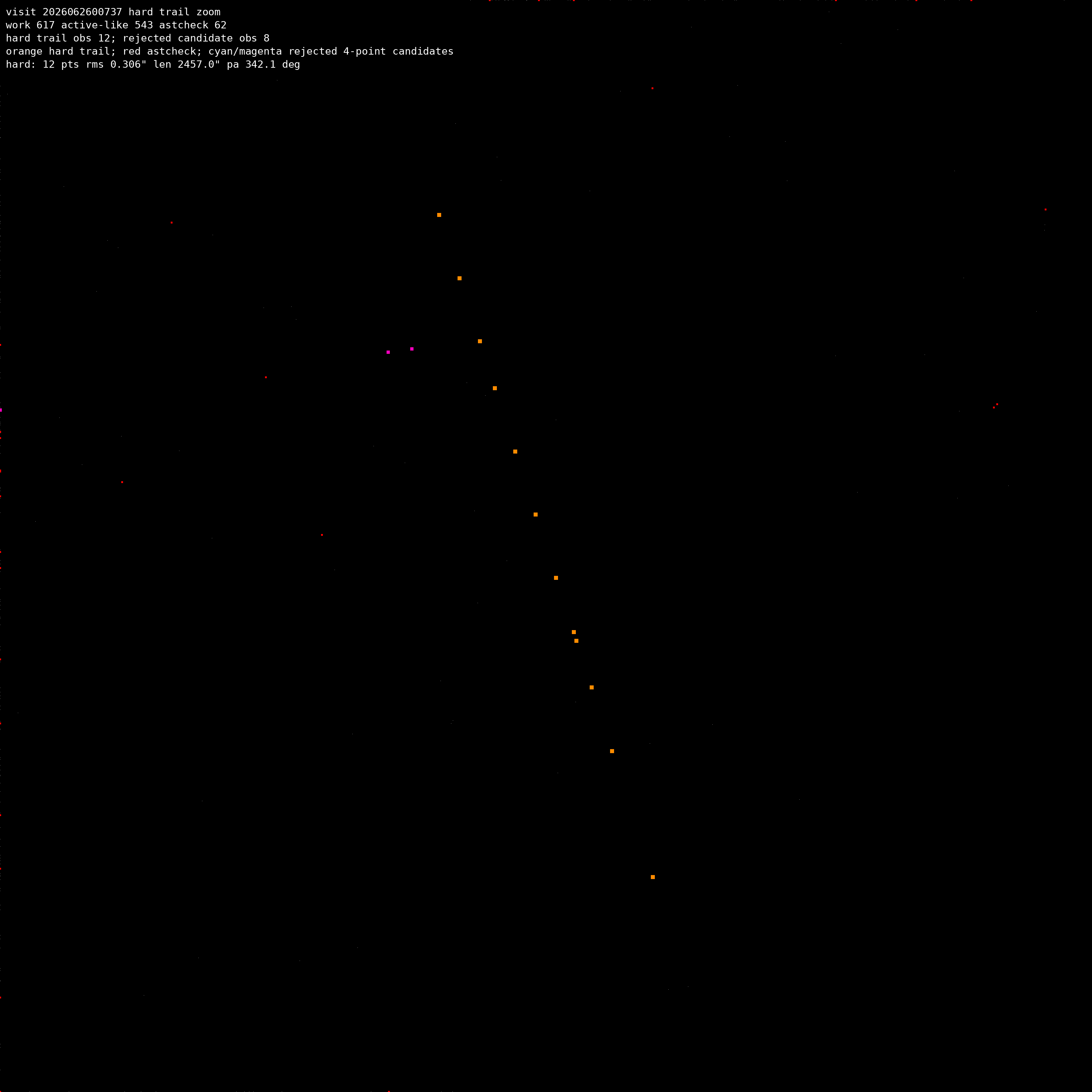


 . Thanks, mods!