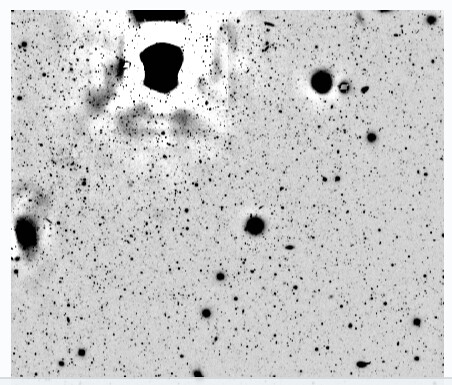
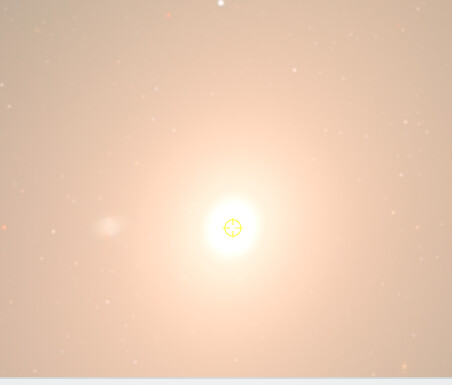
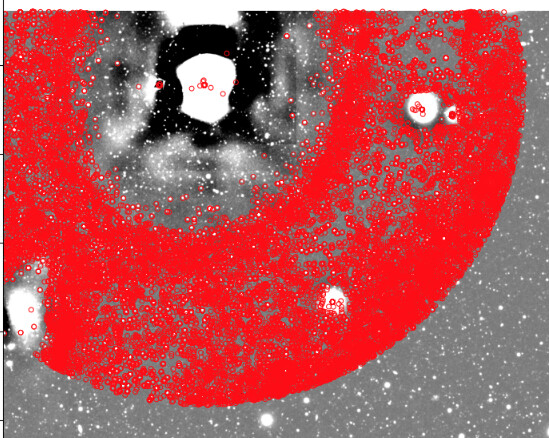
When i query deep coadd images from EDP2, say of M49, its center (roughly 60-100") appears to be saturated in all bands . Where as its not saturated in the pretty coadd images that is HiPS .
Is there any way we can get unsaturated images in EDP2 or should we wait till the individual visit images are released in DP2?
Hi @Niranjana_2002 , thanks for your question.
The individual visit images will be included in the full DP2.
The core of M49 is saturated. It doesn’t look saturated in the pretty_coadd HIPS, because those saturated pixels have been filled in with approximate values of a reasonable color as for saturated stars.
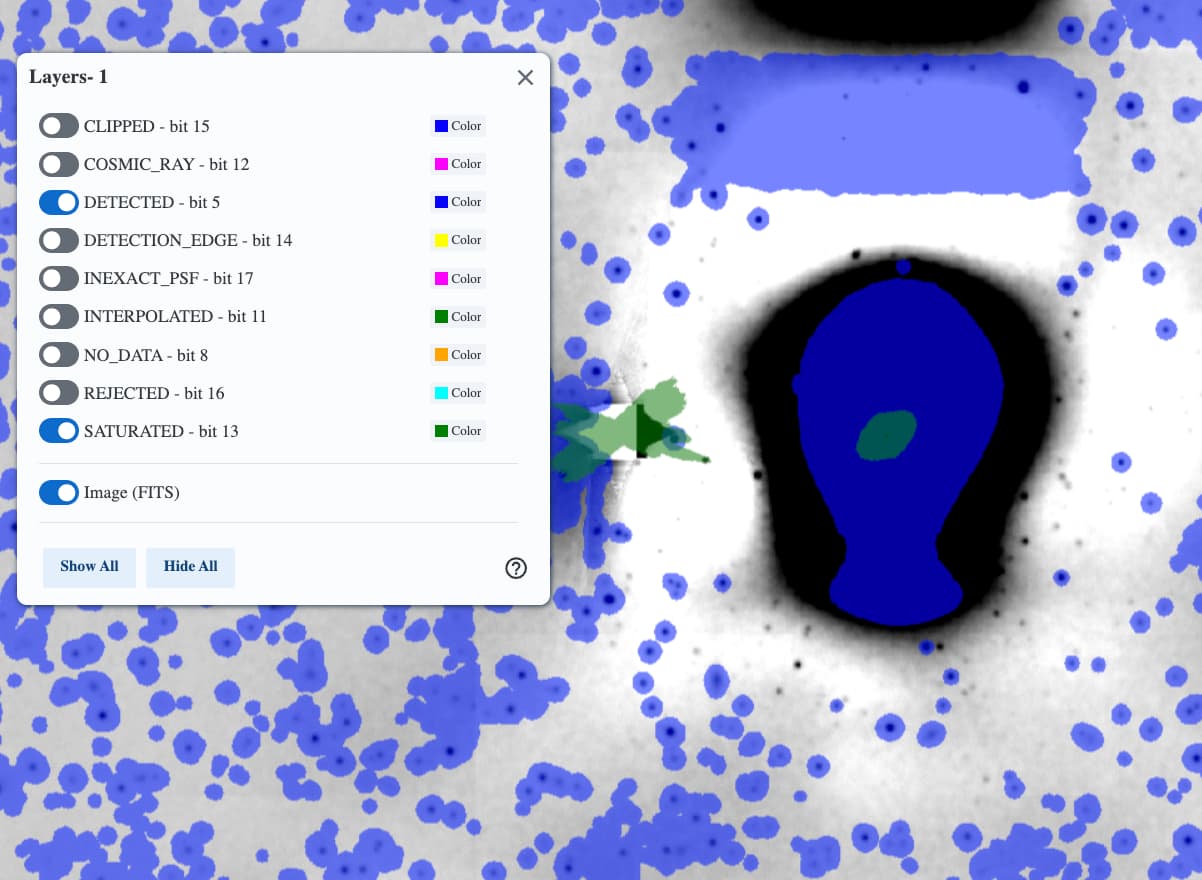
Here is a code snippet to display the image with its mask in Firefly (showing different layers), which shows exactly which pixels are saturated and how it affects the detection of nearby objects.
import numpy as np
from lsst.daf.butler import Butler
import lsst.afw.display as afwDisplay

butler = Butler("dp2", collections="dp2")
afwDisplay.setDefaultBackend("firefly")
afw_display = afwDisplay.Display(frame=1)

ra = 187.44484
dec = 8.00048
band = 'i'
query = "band.name = :band AND patch.region OVERLAPS POINT(:ra, :dec)"
bind = {'band': band, 'ra': ra, 'dec': dec}
refs = butler.query_datasets("deep_coadd", where=query,
                             bind=bind, order_by='patch')
deep_coadd = butler.get(refs[0])

afw_display.image(deep_coadd)
With the above code snippet, within Firefly you can set the layers to display the DETECTED (blue) and SATURATED (green) pixel masks to more clearly visualize the regions with undetected sources, and saturated pixels (namely, in the core of M49).
Since Shenming’s explanation of the difference between the “pretty” HiPS maps and the actual deep coadd images answers the original question, I’ve marked it as the solution to this topic. But as always feel free to unmark and continue the discussion, or to raise new and related issues in new Support topics, anytime.